

What we learned facilitating staff retreats in 2026
“Honestly, I’m not sure this is the right moment for a retreat.”

We hear this sentence in almost every first call. The office is restructuring. Budgets are under pressure. People are tired. Surely the team gathering can wait until things calm down?
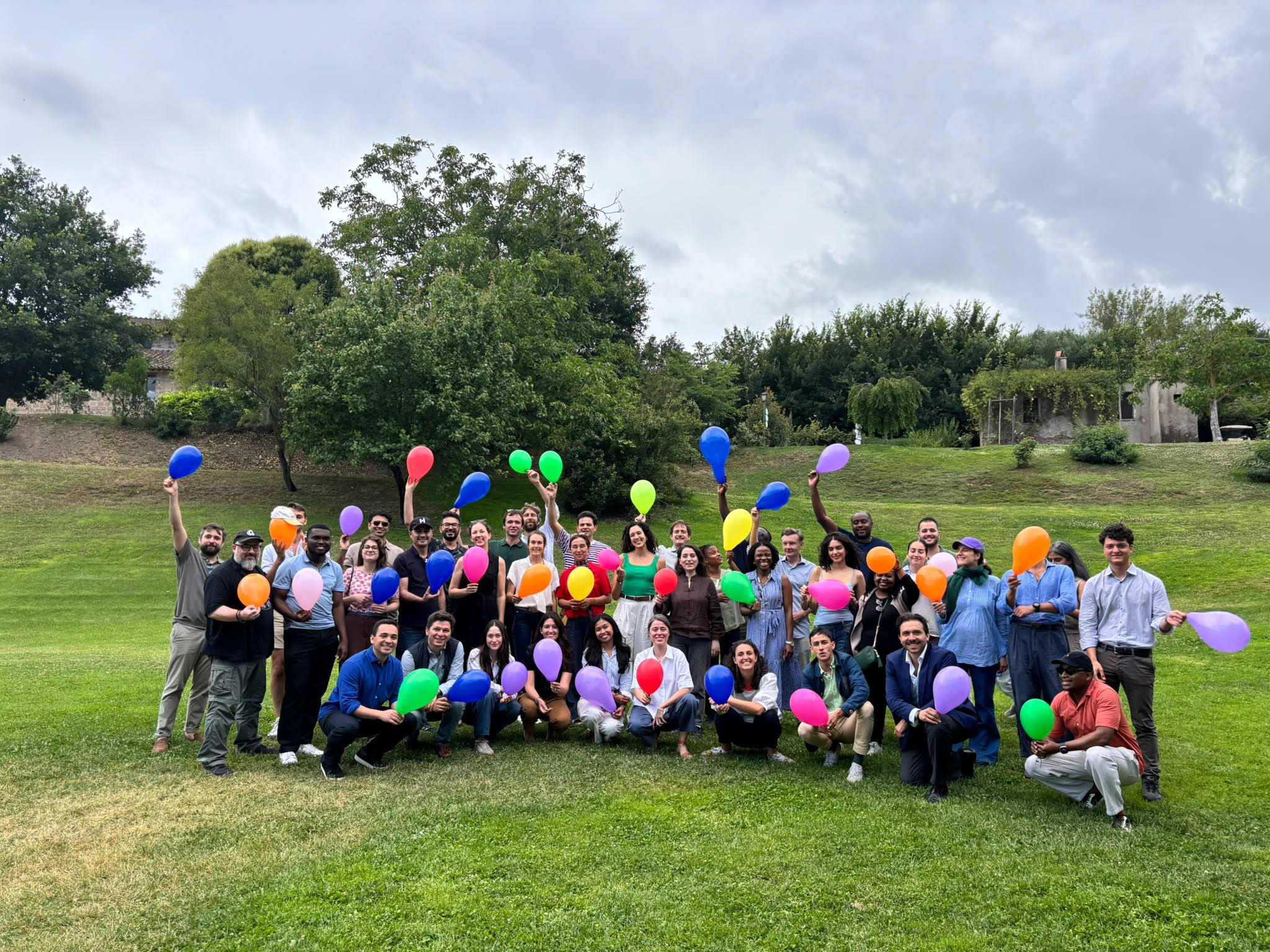
This year we facilitated staff retreats for two UNICEF country offices, in China and in Uganda. Both teams were in the middle of major reconstruction. Both leaderships had doubts about the timing. And both retreats turned out to be exactly what their teams needed.
In China, we accompanied more than 100 staff through a multi-phase engagement: diagnostics before the retreat, two days of facilitation, and leadership check-ins after. In Uganda, we spent two intensive in-person days with the operations team as they rebuilt trust and clarity after a difficult reorganisation.
Here is what those rooms taught us.
The wrong moment is the right moment
Let’s start with the timing question, because it comes up every single time.
When everything feels uncertain, gathering the team can look like a luxury. In our experience, it is the opposite. Uncertainty is precisely when people most need to be in the same room, saying the things they have been saying only in private messages and corridor conversations. In both China and Uganda, the retreat did not distract from the change process. It made the change process workable.
Leaders underestimate their teams

In both offices, leadership arrived with a quiet worry. Would the conversations get too raw? Would frustration take over the room? Was the team even ready for this?
Then the teams surprised them. People showed up more adaptable, more constructive and more generous than anyone expected. Staff did not need to be protected from honest dialogue. They had been waiting for it. If there is one pattern we have seen across every retreat we facilitate, it is this: people rise to the moment when you give them a real one.
A good retreat tells you things you didn’t know

Some of the most valuable outcomes were things nobody had planned for. Misalignments leadership had no idea existed. Strengths sitting quietly in the team, unused. Concerns that had simply never found a channel.
Our pre-retreat diagnostics, the surveys and interviews we run before anyone enters the room, surfaced part of this picture. The retreat itself did the rest. Several leaders told us afterwards that they learned more about their office in two days than in the previous six months.
Anonymous questions, answered live
If we had to pick the single most powerful moment of both retreats, it would be theanonymous Q&A with the senior management team.
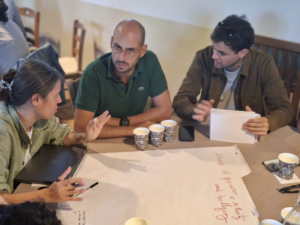 The format is simple. Staff submit questions anonymously, in real time. Leadership answers them live, in front of everyone. No filtering, no pre-screening, no soft-pedalling. It takes courage, and it repays that courage instantly. Watching a Representative answer the question everyone had been thinking but nobody had dared to ask changes the temperature of a room. In both offices, this one session did more for trust than any team-building activity could.
AI belongs in the retreat room now
 This one might surprise you in a blog about retreats. In China, we worked with staff on integrating AI tools into their everyday workflows. In Uganda, we focused on the ethics of it: how to use AI responsibly in a UN context, from day one. What struck us was the appetite. People are not looking for another webinar about AI. They want honest, hands-on conversations about what these tools mean for their actual jobs. Bringing that conversation into the retreat, right alongside culture and trust, turns the digital transition from a source of quiet anxiety into a shared project. It has now become a standard part of every retreat we design.
Professional facilitation makes the difference
Many offices are tempted to run the retreat themselves. Someone from HR or a well-liked manager takes the agenda, and the team gets a pleasant day. What it rarely gets is the hard conversation. An internal facilitator is part of the system they are trying to examine. They have a boss in the room, a history with every participant, and a stake in how things land.
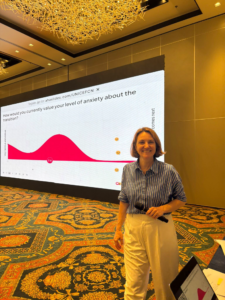
An external facilitator arrives with a different style and, more importantly, a different licence. We can ask the questions insiders cannot: the obvious ones nobody names, the awkward ones everyone is circling. We have no position to protect, so the room does not have to manage us.
The other thing professional facilitation buys you is flexibility. In both China and Uganda, the agenda we designed was not exactly the agenda we delivered. When the room needs something different from what was planned, an experienced facilitator notices it, names it, and changes course in the moment, without losing the thread of the day. A script cannot do that. A colleague reading from one cannot either
The retreat is the beginning, not the event
A retreat without follow-up is a nice memory. A retreat with follow-up is a turning point.
What sustains the momentum is unglamorous: documented outcomes, concrete action plans, and leadership check-ins scheduled before everyone leaves the room. In China, the retreat was one milestone in a longer arc of support rather than a one-off event, and that is the model we now recommend to every office we work with.
Gratitude is data
Across both retreats, participants kept telling us the same thing: this was the most meaningful team experience of their year. The feedback exceeded expectations on both sides, staff and leadership alike.
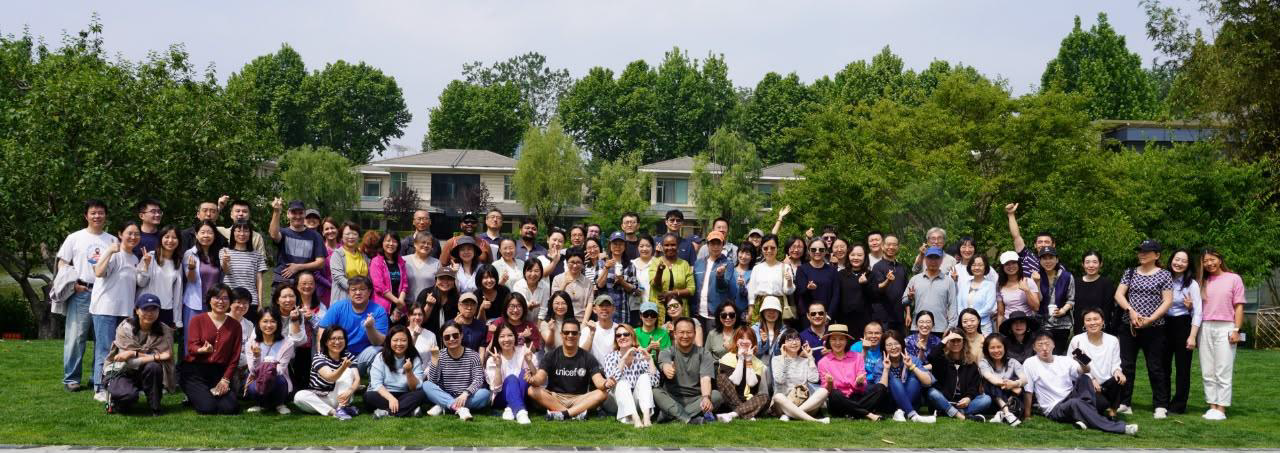
We have learned to take that gratitude seriously, because it carries information. Investing real time in your people sends a message that no town hall or all-staff email can: you matter here.
Delivered in the middle of uncertainty, that message is what prevents the disengagement, turnover and miscommunication that change so often leaves behind.
So, is it the right moment?
If your office is in the middle of change and you are wondering whether this is really the time to bring everyone together, our answer after China and Uganda is simple. It is. When in doubt, gather the team. The return is always worth it.